Before purchasing a silicon carbide heating element, make sure the following information
How to Select a Suitable Silicon Carbide Heating Element for Your Furnace or Kiln
Selecting the right heating element is one of the most important decisions when designing, upgrading, or maintaining an industrial heating system. Whether the equipment is used for ceramics, metallurgy, glass processing, powder sintering, laboratory testing, or other thermal applications, the performance of the heating element directly affects temperature stability, energy efficiency, product quality, maintenance costs, and equipment service life.
A Silicon Carbide Heating Element is widely used in industrial thermal equipment because of its excellent resistance to oxidation, strong mechanical properties, and ability to operate under High Temperature conditions. However, different furnaces require different specifications. Buyers need to consider operating temperature, furnace atmosphere, installation space, electrical parameters, element shape, dimensions, and application requirements before making a final decision.
This article explains how to choose a suitable Silicon Carbide Rod, including important factors such as element type, size, resistance, installation method, and customization options.
1. Understand Your Operating Temperature
The first factor to consider is the required operating temperature. Silicon carbide heating elements are designed for demanding High Temperature applications and are commonly used in equipment operating from approximately 600°C to more than 1600°C, depending on the element grade, furnace design, atmosphere, and operating conditions.
Before selecting a SiC Heating Rod, buyers should clearly define:
· Maximum furnace operating temperature
· Normal working temperature
· Heating cycle frequency
· Required heating rate
· Continuous or intermittent operation
· Temperature uniformity requirements
A heating element should not simply be selected based on the maximum temperature listed in a catalog. The actual working environment is equally important. A Furnace operating continuously at a high temperature may require a different element configuration from equipment that only reaches the same temperature occasionally.
For example, a ceramic Kiln that operates for long production cycles may require elements with stable resistance and excellent oxidation resistance. A laboratory furnace, on the other hand, may require faster heating performance and more precise temperature control.
Therefore, understanding the real operating temperature is the foundation for choosing the correct Silicon Carbide Heating Element.
2. Choose the Correct Heating Element Type
Silicon carbide heating elements are available in different designs to match various furnace structures and installation requirements. Common designs include:
· U Type
· W Type
· GD Type
· ED Type
Each design has different characteristics.
U Type Silicon Carbide Heating Element
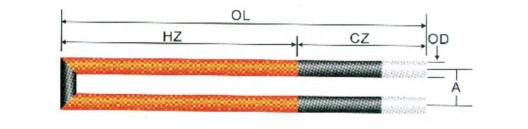
The U Type design is commonly used when both terminals need to be positioned on the same side of the furnace. This configuration can simplify installation and maintenance. It is suitable for many industrial furnaces where space and electrical connection arrangements require a compact structure.
W Type Silicon Carbide Heating Element
The W Type element provides multiple heating sections and is often used when a higher heating capacity is required within a limited installation area. It can provide a larger heating surface and is suitable for certain high-capacity furnace designs.
GD Type Silicon Carbide Heating Element
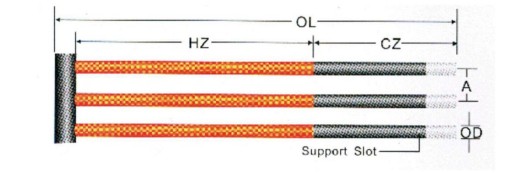
The GD Type is a traditional straight-type design with a hot zone and cold ends. It is widely used in different types of electric furnaces and kilns because of its simple structure and reliable performance.
ED Type Silicon Carbide Heating Element
The ED Type is another commonly used configuration designed for specific installation and electrical connection requirements. Buyers should select the appropriate design according to furnace dimensions, heating chamber structure, terminal location, and power requirements.
When selecting between U/W/GD/ED Type elements, it is important to provide detailed furnace drawings or installation dimensions to the manufacturer. Choosing the wrong structure can make installation difficult and may affect heating efficiency.
The selection of U/W/GD/ED Type should always be based on the actual equipment design rather than price alone.
3. Determine the Correct Size and Dimensions
A Silicon Carbide Rod must fit correctly inside the furnace or kiln. Incorrect dimensions can cause installation problems, uneven heating, or premature element failure.
Important dimensions include:
· Overall length
· Hot zone length
· Cold end length
· Element diameter
· Distance between terminals
· Installation hole size
· Furnace wall thickness
The hot zone is the section that generates heat inside the furnace chamber. The cold ends are normally positioned through the furnace wall and connected to the electrical system.
When ordering a SiC Heating Rod, customers should provide a detailed drawing whenever possible. Even a small difference in dimensions can affect installation.
Manufacturers can often provide a Custom Size according to the customer’s furnace design. Customization may include special lengths, diameters, resistance values, hot zone configurations, and terminal structures.
For replacement projects, buyers should carefully measure the existing element before ordering. The correct Custom Size ensures compatibility with the existing furnace and can reduce installation time.
4. Match the Electrical Resistance with the Power Supply
Electrical resistance is another critical factor when selecting a Silicon Carbide Heating Element. The resistance value determines how much electrical power the element consumes and how much heat it generates.
Important electrical information includes:
· Voltage
· Power
· Number of heating elements
· Connection method
· Single-phase or three-phase power supply
· Required resistance per element
Silicon carbide elements gradually increase in electrical resistance during operation. As the element ages, the electrical system may need to compensate by increasing the voltage.
For this reason, the transformer and control system should be designed with an appropriate voltage adjustment range.
A properly selected Electric Heater system should provide stable heating throughout the service life of the elements. If the resistance is not correctly matched with the transformer and control equipment, the furnace may experience insufficient heating, excessive current, or uneven temperature distribution.
When purchasing replacement Silicon Carbide Rod elements, buyers should provide the original resistance value if available.
5. Consider the Furnace Atmosphere
The furnace atmosphere can significantly affect the performance and service life of a SiC Heating Rod.
Different operating environments may include:
· Air
· Oxygen-rich atmosphere
· Neutral atmosphere
· Nitrogen
· Hydrogen
· Carbon-containing atmosphere
· Chemical vapors
Silicon carbide heating elements generally perform well in many industrial environments, but certain atmospheres can accelerate chemical reactions or material degradation.
For example, the atmosphere inside a Furnace used for ceramics may be very different from the atmosphere inside equipment used for metal processing. Before selecting an element, customers should inform the supplier about the material being heated and the gases or vapors present during operation.
This information allows the manufacturer to recommend a suitable Silicon Carbide Heating Element and operating configuration.
6. Evaluate the Furnace and Kiln Structure
The physical design of the Furnace or Kiln directly influences the heating element selection.
Important considerations include:
· Heating chamber dimensions
· Number of heating zones
· Element installation direction
· Side-wall or top installation
· Distance between heating elements
· Insulation material
· Air circulation
· Temperature uniformity requirements
A large industrial kiln may require multiple heating zones, while a small laboratory furnace may only require a few elements.
The location of the Electric Heater also affects heat distribution. If heating elements are positioned incorrectly, some areas may become hotter than others.
Proper spacing between each Silicon Carbide Heating Element is necessary to achieve uniform temperature distribution. Furnace designers should consider both the total power and the physical arrangement of the heating elements.
7. Select the Appropriate Diameter
The diameter of a Silicon Carbide Rod affects mechanical strength, electrical resistance, and heating performance.
Smaller-diameter elements may be suitable for compact equipment or lower-power applications. Larger-diameter elements may provide greater mechanical strength and may be selected for larger industrial furnaces.
However, a larger diameter is not always the best solution. The selection should be based on the required power, furnace dimensions, installation structure, and resistance requirements.
A manufacturer can recommend the appropriate diameter after receiving information about the High Temperature application and electrical specifications.
8. Consider Service Life and Resistance Aging
All heating elements experience changes during long-term operation. Silicon carbide elements gradually increase in resistance as they age.
A reliable Silicon Carbide Heating Element supplier should consider resistance aging when designing the electrical system.
For long-term operation, buyers should ask about:
· Expected service life
· Resistance change during operation
· Recommended transformer capacity
· Voltage adjustment range
· Maintenance recommendations
· Replacement procedures
A high-quality SiC Heating Rod combined with a suitable control system can help maintain stable furnace performance and reduce unexpected downtime.
It is also recommended to replace matched elements in the same heating zone when necessary. Mixing old and new elements with significantly different resistance values can create electrical imbalance.
9. Choose a Reliable Manufacturer with Custom Capability
Industrial furnaces often have unique designs, which means standard products may not always provide the best solution.
A professional manufacturer should be able to offer:
· Standard and customized specifications
· Custom Size options
· Technical drawings
· Resistance matching
· Different U/W/GD/ED Type designs
· Application recommendations
· Quality inspection
· Replacement element support
A customized Silicon Carbide Heating Element can be designed according to the exact requirements of the furnace.
When contacting a supplier, customers should provide the following information:
1. Furnace or kiln operating temperature
2. Heating chamber dimensions
3. Element drawing or existing sample
4. Required voltage and power
5. Number of heating elements
6. Furnace atmosphere
7. Required element type
8. Required Custom Size
9. Resistance value, if available
The more technical information provided, the easier it is to select the correct product.
10. Typical Applications of Silicon Carbide Heating Elements
A Silicon Carbide Heating Element is widely used in different types of High Temperature thermal equipment.
Typical applications include:
Ceramic Kilns
Ceramic products require accurate temperature control during firing and sintering. A properly designed Kiln equipped with silicon carbide heating elements can provide stable and efficient heating.
Glass Processing Furnaces
Glass processing often requires high operating temperatures and consistent heating. Silicon carbide elements are commonly used in glass melting and heat treatment equipment.
Metallurgical Furnaces
Metal heat treatment, sintering, and other thermal processes require reliable heating performance. A properly designed Furnace can use silicon carbide elements to achieve stable temperature control.
Laboratory Furnaces
Laboratory equipment requires precise heating and repeatable performance. The correct SiC Heating Rod can help maintain stable testing conditions.
Industrial Electric Heater Systems
Silicon carbide elements can also be integrated into specialized Electric Heater systems for industrial manufacturing processes.
11. Final Selection Checklist
Before ordering a Silicon Carbide Rod, confirm the following information:
· Required maximum operating temperature
· Normal working temperature
· Furnace or kiln dimensions
· Required power and voltage
· Number of heating elements
· Element diameter
· Hot zone length
· Cold end length
· Required resistance
· Furnace atmosphere
· Installation method
· Required U/W/GD/ED Type
· Need for a Custom Size
A complete technical specification will help the supplier recommend the most suitable Silicon Carbide Heating Element for the application.
Conclusion
Choosing the right heating element is essential for achieving stable temperature control, high energy efficiency, and long service life. Buyers should not select a Silicon Carbide Rod based only on diameter or price. Operating temperature, furnace atmosphere, electrical resistance, installation structure, element type, and dimensions must all be considered.
Whether the application involves a ceramic Kiln, industrial Furnace, laboratory equipment, or specialized Electric Heater, selecting the correct SiC Heating Rod can improve performance and reduce maintenance costs.
Professional suppliers can provide technical support for U/W/GD/ED Type elements and customized designs based on specific equipment requirements. By providing accurate technical information and requesting the correct Custom Size, customers can obtain a heating solution that delivers reliable performance under demanding High Temperature conditions.