What Preheating Rate Is Safe for a Newly Installed MoSi2 Element?
What Preheating Rate Is Safe for a Newly Installed MoSi2 Element?
Does MoSi2 heating element need preheating before first use? Yes. A controlled initial heat-up is strongly recommended because it reduces thermal shock and supports stable protective oxide formation.
For most newly installed molybdenum disilicide elements, begin with a conservative rate of 50-100 degrees Celsius per hour until the furnace reaches approximately 600 degrees Celsius.
Above 600 degrees Celsius, many well-installed MoSi2 systems can increase to 100-200 degrees Celsius per hour, provided the furnace atmosphere, wiring, loading, and element geometry are correct.
The safest commissioning rate is not determined by element material alone. Furnace mass, chamber design, temperature uniformity, control accuracy, and installed accessory condition all affect startup risk.
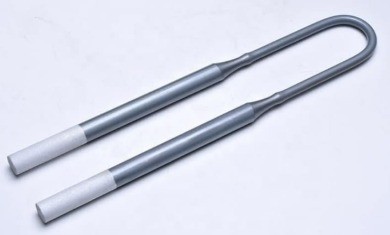
Search Intent: What Furnace Operators Need to Know Before First Use
People searching for a safe MoSi2 preheating rate usually need an operational answer before energizing a new furnace, replacement element set, or upgraded heating zone.
They are rarely looking for a theoretical material description. They want to avoid premature breakage, resistance imbalance, electrical overload, and unplanned production interruptions during commissioning.
Plant managers also need a practical risk decision: whether a slow initial startup is worth the extra time compared with the cost of replacing damaged elements.
Maintenance engineers need clear heating stages, inspection points, and warning signs. Furnace builders need a reliable procedure they can provide with equipment handover documentation.
The most useful answer is therefore a commissioning method, not one universal heating rate. MoSi2 elements perform reliably when installation and startup conditions are controlled together.
A Practical Safe Preheating Schedule for New MoSi2 Elements
A conservative startup schedule is appropriate when the furnace is new, the lining may retain moisture, the chamber is large, or temperature control has not been fully verified.
Start from ambient temperature and heat at 50-100 degrees Celsius per hour to 300 degrees Celsius. Hold briefly if the refractory lining, insulation, or cement contains residual moisture.
Continue at 50-100 degrees Celsius per hour from 300 degrees Celsius to 600 degrees Celsius. This range gives the assembly time to expand gradually and evenly.
After reaching 600 degrees Celsius, hold for 30-60 minutes when possible. The hold helps confirm stable current behavior and allows operators to inspect abnormal odors, smoke, or controller fluctuations.
From 600 degrees Celsius to the normal process temperature, a rate of 100-200 degrees Celsius per hour is commonly suitable for properly installed elements and stable industrial furnaces.
For high-value furnaces, sensitive laboratory systems, or large ceramic kilns, keep the rate near 100 degrees Celsius per hour until the first complete firing cycle is finished.
Once commissioning has been successful, later heating rates may follow the furnace manufacturer’s operating procedure. Routine cycles can often be faster than the initial startup cycle.
Do not interpret this schedule as a substitute for the element supplier’s technical limits. Special grades, element diameters, and furnace designs may require a different program.
Why the First Heating Cycle Deserves Extra Attention
MoSi2 heating elements are designed for very high operating temperatures, but a newly installed element system is vulnerable to mechanical and thermal setup errors.
During heating, the element, alumina insulation, metal clamps, terminal straps, refractory wall, and support hardware expand at different rates. Uneven expansion can create localized stress.
A gradual preheat reduces the temperature difference between the hot zone and cold ends. This is especially important where elements pass through furnace walls.
Initial heating also promotes the development of a silica-based protective layer on the MoSi2 surface. This oxidation-resistant layer supports long-term performance in appropriate atmospheres.
The protective layer forms best when heating is steady and the element operates within its intended temperature range. Abrupt cycling and severe temperature gradients are less favorable conditions.
New refractories can release absorbed water, binders, oils, or volatile compounds. Slow startup helps remove these materials without sudden pressure changes or aggressive atmosphere disturbances.
In some furnaces, the greatest danger is not the MoSi2 element itself. Moist insulation, poor clamp contact, and inaccurate thermocouple feedback can cause the real failure.
When Should You Use an Even Slower Heating Rate?
Use a slower ramp when the furnace has been relined, repaired with castable refractory, or stored in humid conditions. Moisture removal should take priority over production speed.
Newly installed large-diameter MoSi2 elements may also benefit from a conservative ramp because their supports and terminal assemblies require uniform thermal expansion during initial operation.
Slow the heating rate when the furnace chamber is heavily loaded with dense ceramic setters, metal fixtures, graphite components, or large workpieces with uneven thermal mass.
A loaded furnace can develop greater internal temperature variation than an empty chamber. The controller temperature may look acceptable while individual elements experience unequal radiation conditions.
Use a reduced rate when replacing only one or two elements in an older furnace. Existing elements may have higher resistance and different operating characteristics than new ones.
In mixed-age element sets, current sharing deserves close attention. Replacing all elements in the same electrical zone is often preferable when resistance differences are significant.
Lower heating rates are also advisable if the power supply has recently changed, the transformer taps were adjusted, or the control system has not been tested under load.
Installation Checks That Matter More Than the Exact Ramp Rate
A safe ramp cannot compensate for incorrect installation. Before applying power, verify that every element is supported without bending, twisting, forced alignment, or contact with refractory surfaces.
MoSi2 elements are brittle at room temperature. Never use the terminal ends as levers when positioning them, and avoid tightening clamps with excessive mechanical force.
Confirm that the hot zone is centered correctly inside the furnace chamber. Unequal exposure can produce temperature imbalance between legs or between neighboring elements.
Check the cold-end sealing arrangement carefully. Insulation blocks, ceramic bushings, and wall openings should hold the elements securely while allowing normal thermal expansion.
Electrical clamps must contact clean terminal surfaces firmly and evenly. Oxidized, loose, or contaminated connections create resistance heating at the terminal rather than within the hot zone.
Inspect conductive straps, flexible braids, busbars, and transformer connections for correct polarity, torque, insulation clearance, and conductor size. Poor connections can cause unstable current readings.
Measure and record the resistance of each element or element group before startup. Significant deviations should be investigated before the furnace reaches high temperature.
For parallel-connected groups, compare resistance values closely. A weak or mismatched element can draw unequal current and shorten the life of the entire heating zone.
How Furnace Atmosphere Changes the Commissioning Decision
MoSi2 elements are widely used in oxidizing atmospheres because their surface can form a protective silica layer during high-temperature operation.
Air-fired furnaces are generally suitable, provided the atmosphere remains reasonably clean and the furnace avoids conditions that attack silica or contaminate the element surface.
Reducing atmospheres require more caution. Hydrogen, carbon monoxide, hydrocarbon gases, and certain low-oxygen environments can change surface reactions and require specialist operating guidance.
Vacuum operation is also not automatically suitable for every MoSi2 application. The furnace design, temperature range, protective atmosphere, and element grade must be evaluated together.
Halogens, alkali vapors, metal fumes, and chemical contaminants may damage the protective layer or react with furnace components. A slower ramp will not solve chemical incompatibility.
If the process releases volatile salts, lead compounds, zinc compounds, or aggressive glass vapors, discuss shielding, element placement, and material selection with the supplier before commissioning.
Atmosphere review matters because element failure may appear electrical while the root cause is chemical attack. Inspecting the failed surface can reveal the actual operating problem.
What to Monitor During the First Preheating Cycle
During the first cycle, record furnace temperature, programmed ramp rate, voltage, current, power demand, and any difference between electrical zones.
Current should respond consistently as temperature rises. Sudden spikes, unstable readings, or large differences among phases may indicate a loose connection, wiring error, or resistance mismatch.
Watch the furnace controller against an independent temperature measurement when available. Incorrect thermocouple placement can cause the elements to overheat before the displayed temperature appears excessive.
Observe element color through approved viewing ports only when safe. Major differences in brightness between equivalent elements can indicate unequal loading or installation problems.
Do not open the furnace unnecessarily during hot operation. Sudden cold air entry can disturb temperature uniformity and may impose avoidable thermal stress on hot components.
Listen for unusual electrical humming, arcing, or relay chatter. These symptoms can indicate poor terminal contact, inadequate insulation distance, or an unstable power-control circuit.
After the furnace cools, recheck terminal tightness according to the manufacturer’s procedure. Thermal cycling can settle clamps and conductive connections during the first operation.
Common Startup Mistakes That Shorten MoSi2 Element Life
The most common mistake is treating a new MoSi2 installation like a fully commissioned furnace. Operators may select the maximum programmed ramp before checking basic electrical balance.
Another error is energizing elements while refractory work remains damp. Steam release can affect insulation, distort local heat transfer, and create an unstable first firing environment.
Using mismatched old and new elements in one parallel circuit can cause unequal current distribution. The new element may not operate at the intended load.
Overtightened clamps are another preventable problem. MoSi2 terminals need reliable electrical contact, but excessive force can damage brittle material or restrict thermal movement.
Ignoring furnace-wall clearance can create stress as the element expands. Elements should not rub against refractory edges, support blocks, or adjacent components during heating.
Operators sometimes focus only on furnace temperature and ignore voltage or current. Electrical data often identifies a developing problem before visible element damage occurs.
A final mistake is assuming every failure is caused by rapid preheating. Installation quality, atmosphere chemistry, control tuning, and element selection are usually equally important.
How to Decide Whether Your Ramp Rate Is Appropriate
Your preheating rate is probably appropriate when all elements heat uniformly, current remains stable, terminal areas stay cool enough, and the furnace follows the programmed temperature curve.
Reduce the rate and investigate if one element becomes noticeably brighter, one phase draws unusually high current, or the controller repeatedly overshoots its setpoint.
Stop the startup if arcing, severe smoke, abnormal odors, cracked insulation, or unstable electrical readings appear. Continuing can turn a minor installation defect into a major repair.
For production facilities, document the first firing as a baseline. Record the element model, resistance values, transformer settings, ramp schedule, atmosphere, and final observations.
That commissioning record makes future troubleshooting faster. It also helps maintenance teams distinguish normal resistance aging from sudden damage caused by process or electrical changes.
OEM and custom furnace projects should include the ramp schedule in the handover package. A good supplier can provide element layout review, power calculations, and operating guidance.
Conclusion: Start Conservatively, Then Operate with Evidence
Does MoSi2 heating element need preheating before first use? In practical industrial operation, the answer is yes: controlled commissioning is a sensible protection measure.
Use 50-100 degrees Celsius per hour through the lower-temperature range, hold near 600 degrees Celsius when conditions require it, then increase gradually toward process temperature.
The exact safe rate depends on more than the heating element. Furnace dryness, element installation, electrical connections, atmosphere, thermal mass, and controller accuracy all influence the result.
A careful first cycle costs relatively little time compared with emergency downtime, damaged refractories, replacement elements, or an interrupted production schedule.
When uncertainty exists, choose the slower ramp and verify electrical behavior. For unusual atmospheres, customized geometries, or demanding furnace conditions, obtain supplier-specific technical guidance before operation.