What Are Silicon Carbide Protection Tubes Used for in Furnaces?
Silicon carbide protection tubes help shield thermocouples and other temperature-sensing components from the demanding conditions inside industrial furnaces. Valued for their high-temperature strength and resistance to wear and thermal shock, these tubes are used in applications ranging from metal processing to ceramic firing. But how do they work, and when are they the right choice? This article explores their main furnace uses, practical benefits, and key selection considerations.
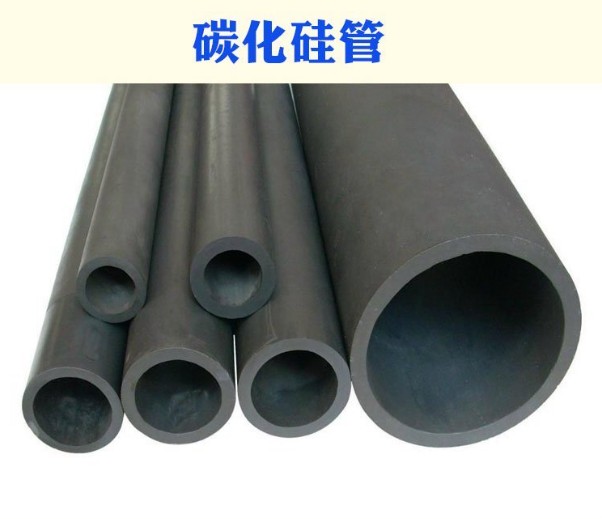
What does a protection tube actually do?
A furnace protection tube forms a physical barrier between a temperature sensor and its surroundings. In a typical thermocouple assembly, the sensing junction sits inside a tube that projects through the furnace wall. The exposed end is often closed, while the other end connects to the external sensor assembly.
Heat passes through the tube wall to the sensor. The tube limits direct exposure to dust, splashes, moving material and some process gases, depending on its construction and installation. This helps prevent mechanical damage and may reduce contamination of the thermocouple.
The distinction between protection and isolation matters. Some silicon carbide materials are porous, and a tube is not automatically gas-tight simply because it looks solid. If the sensor must be separated from a reactive atmosphere, an additional inner tube, a different material or a specifically qualified sealing arrangement may be needed.
The tube also becomes part of the measurement system. A thicker wall or a larger gap around the sensor can slow the response to temperature changes. A damaged tube, poor sensor positioning or deposits on its surface can affect readings in ways that are easy to mistake for a faulty thermocouple.
Where are silicon carbide tubes used in furnaces?
Metal and alloy processing
In metal-processing furnaces, thermocouples may face hot gases, scale, airborne particles and occasional splashes. A silicon carbide outer tube can provide a wear-resistant barrier where a sensor would otherwise be exposed to those conditions. Depending on the furnace design, it may be used to monitor the hot zone, combustion chamber or another location where temperature control is necessary.
Foundry and non-ferrous applications require a closer look at contact conditions. A tube positioned above a molten bath faces a different combination of vapors and splashes from one immersed in the melt. Molten metal, oxides, fluxes and dross can react with or adhere to different ceramic grades. Silicon carbide should not be assumed compatible with every alloy or flux: the proposed material and exposure must be checked together.
For alloy heat treatment, the main concern may instead be maintaining a reliable reading during repeated heating and cooling. Even when no liquid metal is present, the tube can be stressed by thermal cycling, furnace loading operations and the temperature difference between its hot end and its mounting point.
Ceramic kilns and refractory firing
Ceramic kilns expose measuring assemblies to long periods at elevated temperature, particulate matter and repeated firing cycles. Protection tubes can shield thermocouples from kiln dust and accidental contact while keeping the sensing point inside the useful working area.
Location is particularly important here. A sensor too close to a heating element, a kiln wall or a loaded shelf may report a temperature that differs from the ware temperature. Replacing a failed tube with a different length or closed-end position can therefore alter the reading, even if the thermocouple type remains unchanged.
Silicon carbide is also used in refractory manufacturing and other high-temperature firing operations. The same selection questions apply: what contacts the tube, how quickly the furnace cycles, and whether the installation leaves a long section unsupported.
Glass, powder metallurgy and specialized furnaces
Glass-processing equipment can expose sensors to high temperatures and deposits from process materials. In powder metallurgy, airborne powder or contact with furnace furniture may make abrasion and contamination more relevant. Laboratory furnaces and other controlled heating systems may use protective tubes when a bare sensor is too vulnerable for the operating environment.
These applications should not be grouped together as though one tube specification fits them all. A protective atmosphere used for sintering may impose very different requirements from an oxidizing glass furnace. The atmosphere, pressure, temperature and possible deposits all influence the material choice.
Why choose silicon carbide instead of another tube material?
Silicon carbide is attractive when high-temperature mechanical strength and resistance to abrasion matter alongside temperature measurement. Its relatively good thermal conductivity can also help heat pass through the tube wall. Actual sensor response, however, depends on the complete assembly, including wall thickness, sensor contact, internal gaps and mounting.
Compared with a metal protection tube, a suitable silicon carbide grade may be considered when a furnace is too hot or too abrasive for the available metal alloy. Metal tubes can nevertheless be useful where toughness, fabrication or a particular sealed construction is more important. The answer depends on the specific alloy and the actual exposure, not on a general ceramic-versus-metal rule.
Alumina is another common ceramic option, particularly when chemical compatibility or a denser barrier is a priority. It is not automatically interchangeable with silicon carbide. Thermal shock behavior, mechanical loading, chemical exposure and the properties of the particular grade all need consideration. In some assemblies, a silicon carbide outer tube and a suitable ceramic inner tube perform different jobs: one provides the exposed mechanical barrier, while the other offers additional protection for the sensor.
Silicon carbide is not immune to thermal shock or breakage. It is a ceramic, so impacts, uneven heating and bending loads remain concerns. Nor should a generic temperature rating be treated as a safe operating limit for every grade and atmosphere.
The material grade changes the answer
“Silicon carbide” describes a family of materials rather than one uniform product. Recrystallized, reaction-bonded and other silicon carbide compositions can differ in porosity, microstructure and behavior in service. Their suitability depends on how they were manufactured and on any secondary phases present.
For example, recrystallized silicon carbide is used for high-temperature furnace components, including protection tubes. Its porosity needs to be considered when the process atmosphere could harm the thermocouple. A denser-looking alternative should not be assumed gas-tight without the relevant material and assembly information, either.
Ask for the properties that matter to the application rather than relying on the material name alone. These may include the intended operating atmosphere, relevant temperature limits, porosity or permeability information where available, dimensional tolerances and any restrictions on contact with process materials.
How tube dimensions affect measurement and service life
A replacement tube must fit the existing sensor and mounting arrangement, but fit is more than matching the outside diameter. The following details are often decisive:
- Insertion length: The sensing junction should reach the intended measurement zone without placing the tube where it will be struck by the load or furnace equipment.
- Inside diameter: Allow room for the thermocouple and any inner protection tube, while considering how the internal gap affects response and assembly.
- Wall thickness: More material can improve resistance to certain mechanical damage, but it also adds thermal mass and may slow the response.
- Unsupported length and orientation: A long horizontal projection places a different bending load on the tube than a vertical installation. Support arrangements should accommodate temperature changes without creating damaging restraints.
- End and mounting details: Closed-end geometry, overall length, mounting depth and sealing requirements must match the sensor assembly and furnace wall.
The measurement objective also matters. A control thermocouple may need a stable, representative hot-zone reading, while a process investigation may demand a faster response to changes. A robust tube that introduces too much lag can make a rapidly changing process harder to interpret. Conversely, choosing the thinnest possible wall without accounting for handling and exposure can lead to frequent breakage.
Common failure signs and what they may indicate
A cracked tube does not always mean the material was unsuitable. Damage near the furnace wall can point to mounting stress, a sharp temperature gradient or impact during installation. Breakage at an exposed end may be associated with contact from a load, furnace furniture or maintenance tools. Sagging or cracking in a long projection warrants a review of support and operating conditions.
Surface buildup deserves attention as well. Deposits can change how heat reaches the sensor, add weight or create a locally aggressive chemical environment. A thermocouple that fails despite an apparently intact outer tube may have been exposed through porosity, an open connection, a damaged inner component or a reaction involving process vapors.
When investigating a failure, record where the damage occurred and whether it developed gradually or appeared after a particular heating cycle or maintenance event. Preserve the failed component where safe and practical. Photographs, the installation orientation, the process atmosphere and a history of temperature cycles are more useful than a description of the material alone.
Inspection and replacement should follow the furnace operator’s safety procedures. A tube that has survived high temperatures can still be fragile when handled, and furnace isolation and cooling requirements depend on the equipment and process.
What to establish before specifying a tube
Start with the actual duty, not just the furnace nameplate temperature. Identify the normal and maximum temperatures at the tube, the heating and cooling pattern, the atmosphere, and any possible contact with molten metal, flux, powder or deposits. Note whether the tube is exposed continuously or only during part of the cycle.
A drawing or measured sample should show the tube dimensions, insertion depth, mounting position and any inner components. It is also useful to describe the existing problem: slow response, sensor contamination, breakage, deposits or a change in readings. Each points toward a different design question.
Liaoyang Jiaxin Carbide Co., Ltd. manufactures recrystallized silicon carbide protective tubes and offers customization to drawings and operating parameters. For an unfamiliar application, that kind of discussion is most useful when it includes the complete sensor assembly and furnace conditions, rather than a request for a tube based on diameter and length alone.
The practical test is whether the proposed assembly protects the sensor without compromising the reading. Confirm material compatibility, gas-isolation needs, mechanical support and replacement dimensions before treating a silicon carbide tube as a direct substitute for the existing design.